
Latest News - Part 2
Observations of Monitoring Carbon Dioxide Tension and Arterial Oxygen Saturation
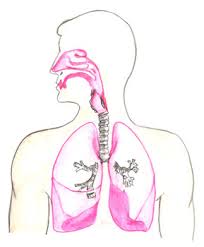 We evaluated the performance of a novel combined earlobe sensor for noninvasive transcutaneous monitoring of Sp02 and PtcC02 in two different settings. The studies in critically ill patients revealed a clinically acceptable agreement of PtcC02 and its changes, and of Sp02 by the transcutaneous sensor with simultaneous measurements made by the “gold standard” (ie, the analysis of arterial blood samples). The observations in patients with sleep apnea provided the opportunity to demonstrate favorable response characteristics of Sp02 by the novel, heated earlobe sensor in comparison with several other pulse oximeters with unheated ear and finger probes during rapid fluctuations in Sa02. Our data suggest that ventilation and oxygenation can be accurately and noninvasively monitored with a single combined earlobe sensor. Continue reading this post…
Outcomes of Monitoring Carbon Dioxide Tension and Arterial Oxygen Saturation
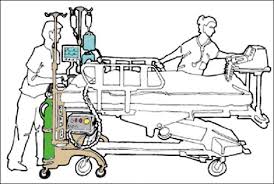
Results in Critically III Patients
In the 18 patients, a total of 80 paired measurements by the earlobe sensor and by arterial blood gas analysis were obtained (mean, 4.4 ± 0.7 paired observations per patient) over a mean observation period of 160 ± 48 min. Nine patients received treatment with vasoactive drugs (ie, IV norepinephrine, 3 to 48 ^g/min; or dobutamine, 100 to 300 ^g/min). The observed range in PaC02 was 22 to 59 mm Hg. There was close agreement between PtcC02 and PaC02 values with a minor bias of 3 mm Hg (p < 0.05) and limits of agreement of ± 7 mm Hg (Fig 1). Agreement between PtcC02 and PaC02 did not differ among patients with and without vasoactive drug treatment bias and limits of agreement, 3 ± 6 mm Hg vs 3 ± 8 mm Hg, the difference was not significant). The observed range of changes in PaC02 during repeated measurements was —17 to + 10 mm Hg, and agreement among the changes in PtcC02 and PaC02 was also close (bias and limits of agreement, 1 ± 6 mm Hg; difference was not significant).
The range of observed Sa02 was 88 to 100%. The bias and limits of agreement of Sp02 measured by the TOSCA sensor vs Sa02 measured by cooximetry were —1 ± 4% (p < 0.05) for all patients, and the corresponding values were similar for patients receiving and not receiving vasoactive drugs (—1 ± 4% vs — 2 ± 4%, respectively; difference was not significant). Continue reading this post…
Research of Monitoring Carbon Dioxide Tension and Arterial Oxygen Saturation
Patients
Eighteen critically ill patients with indwelling arterial lines were studied in the ICU. Their mean (± SD) age was 62.6 ± 14 years. Sixteen patients had acute respiratory failure; 2 patients had experienced an acute myocardial infarction. Fifteen patients were receiving mechanical ventilation, and 9 patients required inotropic and vasoactive drug treatment.
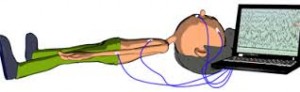
Twelve patients with obstructive sleep apnea syndrome were studied during nocturnal polysomnography or limited sleep studies. Their mean age was 58 ± 8 years, mean body mass index was 35.4 ± 7.2 kg/m2, and mean apnea/hypopnea index was 43 ± 24 events per hour. The Hospital Ethics Committee approved the study. Continue reading this post…
Canadian Health&Care Mall: Monitoring Carbon Dioxide Tension and Arterial Oxygen Saturation
 Coninvasive respiratory monitoring has broad applications in the emergency department, in perioperative and intensive care, and for the evaluation of sleep-related breathing disturbances. Whereas arterial oxygen saturation (Sa02) is commonly estimated by pulse oximetry, PaC02 may be estimated from end-tidal carbon dioxide tension or transcuta-neous carbon dioxide tension (PtcC02). Since alterations in ventilation/perfusion matching and the use of noninvasive mask ventilation may reduce the correlation of end-tidal carbon dioxide tension with PaC02, transcutaneous monitoring of PtcC02 is increasingly used if the rapid tracking of transient fluctuations of PaC02 is not essential. Continue reading this post…
My Canadian Pharmacy about HOw the Refusal of Smoking Improves Sexual Function
Refusal of smoking increases erectile function – quickly and effectively. And “sexual indicators” improve not only at young men – often refusal of smoking helps to get rid of problems with an erection and to people senior than 45 years.
Refusal of Smoking – Increase of Erectile Function
Refusal of smoking makes sense if to think of sexual “capacity” and whether for a long time there will be enough power. Data of the new researches conducted in Great Britain have shown that smokers have impotence for 50% more often than people have never being smoking, or who have refused this addiction. And aged from 40 till 70 years impotence occurs at male smokers twice more often than at their not smoking age-mates. The interrelation of tobacco smoking and impotence is obvious – negative influence on cardiovascular system of carbon monoxide, nicotine and other toxins which are saved in an organism with each cigarette. While getting rid of smoking you may use Viagra, Cialis or Levitra ordered via website – My Canadian Pharmacy. These preparations will help you improve the sexual function.
Refusal of smoking becomes more desired if tobacco smoke influences negatively the sexual function. The member will be able “to waken” only if its structures are filled with blood which it is delivered by blood vessels. Nicotine causes narrowing of arteries increasing risk of adjournment of cholesteric plaques on vessels walls that reduces a blood-flow. Besides, high doses of nicotine often cause sharp narrowing of vessels, including – in the carvenous body. For certain heavy smokers noticed that right after several cigarettes it is problematic to achieve a stable erection even with very seductive partner. Be satisfied with your life with My Canadian Pharmacy.

Also toxic substances from tobacco can cause the so-called venous dilatation – damage of the valvate mechanism which blocks blood in carvenous body during an erection. You shouldn’t forget also about what at smokers is reliable above risk of hypertension and diabetes development. Besides that these diseases aren’t really pleasant in itself, they are one of the main reasons of impotence development.
Refusal of smoking will help to fix problems with an erection on any of the described higher cases.
Refusal of Smoking – Sharp Improvement of Erectile Function!
Refusal of smoking at least even for short time turns into sharp improvement of erectile function – literally at once after the strong-willed decision. In the same way as soon after refusal of smoking physical endurance increases, cough of “smoker” passes in the mornings and in general to health there are many pleasant metamorphoses.
However, the above described facts are obvious to any smoker with an experience. For this reason practically all of them though once also tried to refuse smoking.
5 awesome facts that you should learn about Meldonium
There is no doubt about the good effect of the meldonium which is used to treat ischemia (inadequate blood supply). However, the Canadian Health&Care Mall healthcaremall4you.com website highly recommends consulting a doctor before taking any random amount of dosages.
Meldonium is not only good for treating heart disorders, but also serves as a metabolic enhancer to increase the blood flow, which is especially useful for handling endurance exercises that athletes do. Moreover, there are astonishing facts about the drug and they are:
-
The main purpose of using the drug is treating heart conditions
Meldonium is mainly used as a therapy for heart conditions such as heart failure and angina pectoris that prevents oxygen and blood from reaching the heart muscle. Besides, the drug is used to improve physical and mental functions. -
Meldonium enhances athletic endurance
Drug Testing and Analysis journal conducted a study that showed that the meldonium improves the rehabilitation after exercising, protects against tension and stress, and it increases activations of the central nervous system functionality. -
Meldonium is now limited to be used if prescribed and banned for misusing it
Many athletes are using it, and more than 500 athletes in European games were tested positive which showed that they were using it. An example of those athletes is Maria Sharapova, who revealed that she has been using it for the past 10 years because she had the magnesium deficiency. However the drug got banned because athletes are using it as an enhancer to their performance, so now they can no longer use it in their games, but only use it if prescribed for them as a treatment. -
Meldonium is popular in Baltic countries, and Russian troops used it as stamina enhancer
The development of the drug was made in Latvia, and now it is made by Grindeks, which is a drug company. It is used mainly in Baltic countries such as Ukraine, Latvia, and Poland. In the 1980s, there have been reports by the AP (Associated Press) that Russia troops used the drug to improve their stamina during a battle in Afghanistan. -
Using this drug to treat impotence can help in fighting Lung Disease
According to the Canadian Health&Care Mall men usually suffer from erectile dysfunction or impotence, particularly old men. This issue deserves attention, and if left unattended it may affect the man’s emotional and physical well-being. Moreover, it can cause tension, anxiety and it may even affect his relationship between him and his partner. However, using the treatment of the impotence drug, which is made by the compilation of active ingredients, will not only solve your erectile dysfunction problem, but it also hinders the chance of getting lung disease.

Consulting a doctor before getting it is a must
With all the benefits previously mentioned, it’s no surprise you would want to get this awesome drug. Just consult your doctor and get the suitable prescription for you and then get your meldonium with best deals from the Canadian Health&Care Mall at http://healthcaremall4you.com/meldonium-availability-on-canadian-healthcare-mall-or-meldonium-doping-or-not.html
Sinusitis Is Successfully Treated by My Canadian Pharmacy
Sinusitis is a state at which at the patient the maxillary antrum of paranasal sinus inflames. Pneumatic cavities settle down in bones of human skull. They are covered by mucous membrane. Maxillary antrum is located in the top jaw and is pair body. Both bosoms are connected to nose through an opening which diameter makes about 1-3 mm. Therefore, at mucous membrane hypostasis this small opening is completely closed, and slime collects in the maxillary antrum. The similar phenomenon becomes the contributing factor for active bacteria reproduction. As a result, at the person sinusitis develops.
Sinusitis reasons
As the reason of sinusitis the infection extending in maxillary antrum is meant. Infection comes either through blood, or from the nasal course. Sinusitis at children and at adults is rather often shown in the course of the acute period of flu, at cold, measles and some other diseases which is successfully treated by medications of My Canadian Pharmacy my-medstore-canada. Also the disease can be a complication of the specified illnesses. Sometimes allergic reaction which provokes mucous membrane hypostasis becomes the reason of sinusitis also. Often symptoms of sinusitis are shown at patients who have diseases of gums, and also caries of chewing upper teeth. In view of subtlety of the lower wall of maxillary antrum pathogenic microorganisms can get inside and provoke development of sinusitis.
The high risk of development of sinusitis takes place and at people with polyps in nose and with other violations of correctness of nose structure. Symptoms of sinusitis are more often shown at people who smoke for a long period of time. Besides manifestation of sinusitis symptoms can be promoted by habitual and prolonged use of sprays and drops for nose with vasoconstrictive influence.
Continue reading this post…
 Tadalafil is an orally administered drug for treating impotence (erectile dysfunction), that
initially was developed by the biotechnology company ICOS, and then developed and marketed
world-wide as Cialis, by Lilly ICOS, LLC, the joint venture of ICOS Corporation and Eli Lilly
and Company. Cialis tablets, in 5mg, 10mg, and 20mg doses, are yellow, film-coated, and
almond-shaped.
Tadalafil is an orally administered drug for treating impotence (erectile dysfunction), that
initially was developed by the biotechnology company ICOS, and then developed and marketed
world-wide as Cialis, by Lilly ICOS, LLC, the joint venture of ICOS Corporation and Eli Lilly
and Company. Cialis tablets, in 5mg, 10mg, and 20mg doses, are yellow, film-coated, and
almond-shaped.